

电机之“眼”:编码器选型核心要点速览 (中英文)
什么是电机编码器?
What are motor encoders?
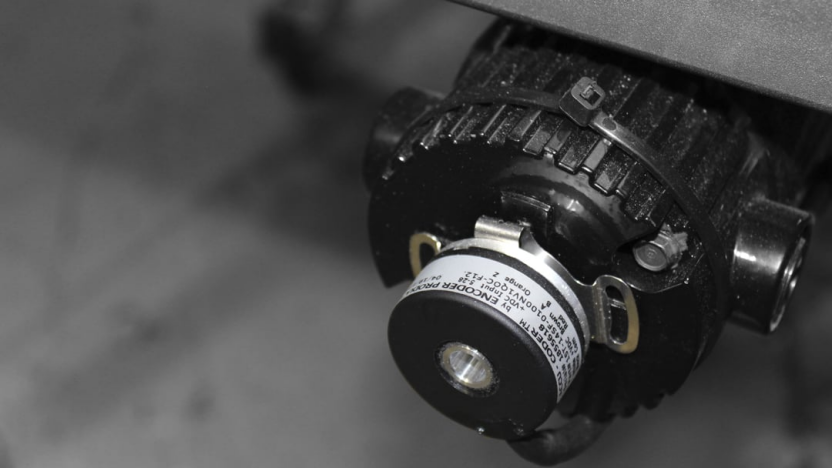
电机编码器是一种旋转编码器,用于提供有关电机轴转速和/或位置的信息。与一般的旋转编码器一样,电机编码器通常采用磁性或光学方式,并产生增量或绝对信号。电机编码器的机械封装形式可以是轴式、通孔式、盲孔式或模块化解决方案。轴式电机编码器使用柔性轴联器将编码器轴连接到电机轴。通孔式或盲孔式外壳通过轴环直接连接到电机轴。编码器外壳可以直接安装到电机外壳上,也可以通过柔性连接臂或安装支架进行安装。
Motor encoders are rotary encoders adapted to provide information about an electric motor shaft's speed and/or position. Like rotary encoders in general, motor encoders are most commonly magnetic or optical and produce signals that are either incremental or absolute. Mechanical packages for motor encoders can be shaft, thru-bore or blind hollow bore, or modular solutions. Shafted motor encoders use a flexible shaft coupling to connect the encoder shaft to the motor shaft. Thru-bore or blind hollow bore housings connect directly to the motor shaft via a shaft collar. The encoder housing can then be mounted directly to the motor housing, or with a flexible tether arm, or a mounting bracket.
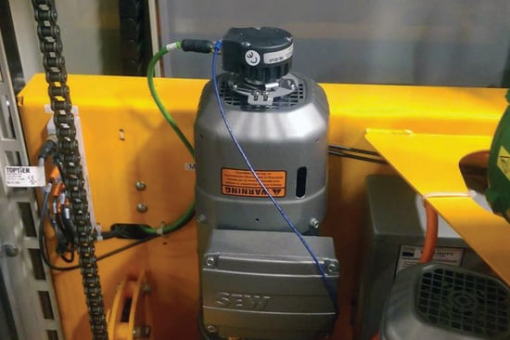
图中所示为配备三点式(SE)柔性安装座的 25H 型盲孔编码器。
The Model 25H blind hollow bore encoder shown with a three-point (SE) flex mount
如何选择电机编码器
How to choose a motor encoder
影响特定应用中电机编码器选择的因素有很多,包括(1)所涉及的电机类型,(2)所需的安装配置,以及(3)控制系统所需的信息类型。
Several factors affect the choice of a motor encoder for a given application, including (1) the type of motor involved, (2) the mounting configuration required, and (3) the type of information required by the control system.
一. 选择哪种类型的电机?
What type of motor?
每种类型的电机对配套的电机编码器都有不同的要求。在大多数情况下,这反映了每种电机的典型应用范围。
Each type of electric motor places its own set of demands on the accompanying motor encoder. In most cases, this reflects each motor’s typical range of uses.
交流电机编码器
AC Motor Encoders
交流感应电机经济高效、坚固耐用。这些特性使其在各种自动化机器控制系统中应用广泛。电机编码器能够使交流电机实现比以往更高的速度控制精度。由于交流电机应用广泛,大多数应用都非常重视抗冲击和抗振动性能。通常,带有工业连接器选项(例如导管盒、自锁式或军用规格)的编码器更受欢迎。
AC induction motors are cost-effective, sturdy, and durable. These qualities make them especially common in a wide range of automated machine control systems. Motor encoders give AC motors a greater degree of speed control than they otherwise would have. Because AC motors are used so widely, most applications put a premium on shock and vibration resistance. Encoders with industrial connector options like a conduit box, latching, or mil-spec are often preferred.
直流电机编码器
DC Motor Encoders
如果没有闭环反馈,直流电机的精确转速控制可能尤其困难。绕线轴在定子磁场中旋转,与系统其他部分隔离,因此可以对其进行一定程度的精确测量;在实际应用中,电机编码器通常是向系统提供直流电机精确转速信息的唯一途径。
The exact speed of DC motors can be especially difficult to control without closed-loop feedback. Isolated from the rest of a system, a wound-wire shaft rotating within a stator’s magnetic field can be measured with some precision; in real-world applications, motor encoders are often the only way to inform the system about a DC motor’s exact speed.
伺服电机编码器
Servo Motor Encoders
永磁电机,即伺服电机,通常用于精度比功率更重要的场合。伺服电机编码器也遵循这一原则,通常设计为高分辨率绝对式编码器,用于闭环系统。增量式编码器反馈与合适的控制系统配合使用,可以成为伺服电机的一种成本更低的反馈替代方案。
Permanent magnet motors, or servo motors, tend to be used in situations where precision is more important than power. Servo motor encoders follow suit and are often designed as high-resolution absolute encoders for use in closed loop systems. Incremental encoder feedback, when coupled with the appropriate control system, can be a lower cost feedback alternative for servo motors.
步进电机编码器
Stepper Motor Encoders
步进电机凭借其设计即可提供位置信息,使其成为开环系统中常用且经济高效的组件。但这一特性也限制了其提供精确的速度控制,尤其是在负载频繁且突变的情况下。步进电机编码器提供闭环反馈以实现更精确的控制,并且通常采用增量式设计,以增强步进电机设计固有的位置控制能力。许多步进电机尺寸紧凑,适用于不使用轴承的模块化编码器。
Stepper motors provide position information by virtue of their design, making them popular, cost-effective components in open loop systems. This feature also prevents them from offering precise speed control, especially when loads change frequently and suddenly. Stepper motor encoders provide closed loop feedback for more precise control, and are often incremental to enhance the position control inherent in stepper motor design. Many stepper motors are compact in size and are suitable for modular encoders that do not use bearings.
二. 电机编码器的安装方式
Mounting options for motor encoders
选择电机编码器时,最后一个主要考虑因素是编码器如何安装到电机上。最常见的几种设计如下。
How an encoder will mount to the motor is the final major consideration when selecting a motor encoder. The most common designs are as follows.
轴式电机编码器
Shafted Motor Encoders
传统上,电机反馈是通过直接耦合到电机轴上的轴式编码器实现的。这使得轴式电机编码器具有其他设计所不具备的电气和机械隔离性。然而,将轴式编码器耦合到电机需要足够长的电机轴以确保牢固安装。连接不良会导致轴的角度改变,从而对电机的性能产生负面影响。在许多设计中,会在电机和编码器之间使用钟形罩或支架。这些因素通常会增加轴式电机编码器的成本。
Traditionally, motor feedback is achieved with a shafted encoder coupled directly to the motor’s shaft. This gives shafted motor encoders a degree of electrical and mechanical isolation that other designs do not. Coupling a shafted encoder to a motor requires a long enough motor shaft for secure mounting, however. A poorly joined coupling can negatively impact a motor’s performance by altering the shaft’s angle. In many designs, a bell housing or standoff is used between the motor and encoder. These considerations typically add cost to shafted motor encoders.
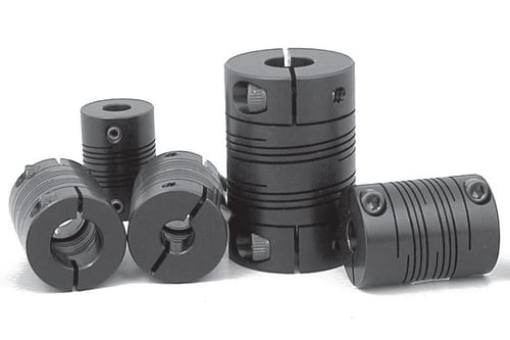
用于牢固连接轴的柔性轴联轴器
Flexible shaft couplings for securely joining shafts
通孔式、盲孔式/空心轴式和轮毂电机编码器
Thru-Bore, Blind Hollow Bore/Hollow Shaft, and Hub Motor Encoders
通孔式和盲孔式/空心轴式编码器比轴式编码器更容易安装:它们通过贯穿轴环直接安装到电机轴上,通常使用柔性钢制系绳臂连接到电机外壳。一些通孔式编码器外壳通过与电机兼容的壳体(例如 C 型壳体)进行连接。这种方法不需要单独的联轴器或后续的轴对准。通孔式电机编码器本身不具备电气隔离功能,除非配备非导电孔衬套和安装衬套。大多数通孔式和盲孔式/空心轴式电机编码器通常采用轻型轴承和外壳结构,因此成本通常低于轴式编码器。
Thru-bore and blind hollow bore/hollow shaft encoders are easier to install than shafted packages: they mount directly to the motor shaft via a pass-through shaft collar and usually use a flexible steel tether arm to attach to the motor housing. Some thru-bore housings attach via a motor-compatible housing, such as a C-face design. This approach does not require a separate coupling or subsequent shaft alignment. Thru-bore motor encoders do not inherently provide electrical isolation unless equipped with non-conducting bore inserts and mounting bushings. Most thru-bore and blind hollow bore/hollow shaft motor encoders usually have lighter duty bearings and housing structure and are typically lower cost than shafted models as a result.
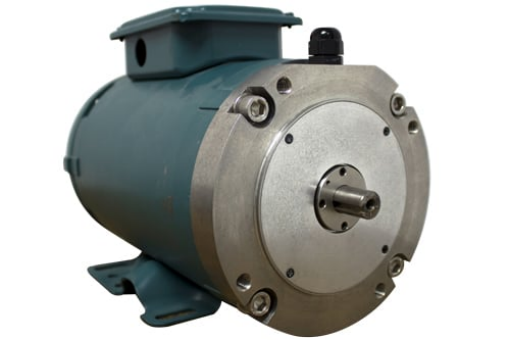
安装在 NEMA C 型电机上的不锈钢通孔编码器
A stainless steel thru-bore encoder mounted on a NEMA C-face motor
模块化电机编码器
Modular Motor Encoders
模块化编码器采用直接安装在轴上的编码器盘,无需轴承组件。独立的传感器模块由轻型外壳支撑。这种设计的优点是尺寸紧凑,且由于机械部件减少,成本更低。此外,由于没有轴承,编码器可以以极高的转速(30,000 RPM 或更高)运行,且无阻力或启动扭矩。由于缺少轴承或稳定外壳结构,模块化编码器容易受到冲击和振动的影响。另一个缺点是,大多数设计需要额外的安装工作,以确保编码器盘和传感器正确对齐并保持适当的间隙。
Modular encoders feature an encoder disk that is mounted directly to the shaft, without a bearing assembly. A separate sensor module is supported by a light duty housing. Benefits of this design are compact size and lower cost due to the reduced mechanical components. Additionally, the lack of bearings enables the encoder to operate at very high speeds – 30,000 RPM or higher – and without drag or starting torque. Modular encoders can be susceptible to shock and vibration, due to the absence of bearings or a stabilizing housing structure. Another drawback is that most designs require additional installation effort to ensure the disk and sensor are properly aligned and gapped.
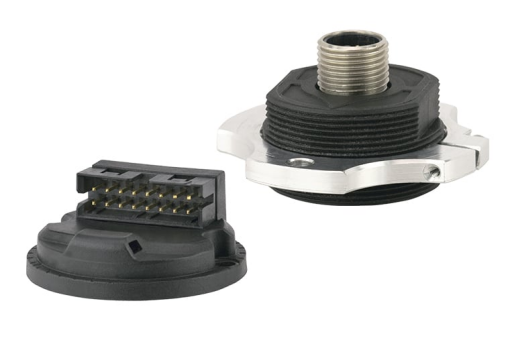
无轴承编码器模块
Bearingless encoder modules
环形安装电机编码器
Ring-Mount Motor Encoders
环形安装电机编码器类似于模块化编码器,但尺寸更大。它由安装在电机外壳上的传感器组件和安装在电机轴上的磁轮组成。与光电编码器相比,环形安装编码器通常具有更强的抗冲击、抗振动和抗污染能力,但磁轮会对电机本身造成额外的机械负荷。因此,环形安装编码器特别适用于使用功率更大、结构更坚固的电机的重载应用。与光电编码器相比,环形安装编码器的分辨率相对较低,仅适用于速度和方向反馈。
Like modular encoders but larger in scale, ring-mount motor encoders involve a sensor assembly mounted to the motor’s housing, and a magnetic wheel mounted to the motor’s shaft. The result is typically more resistant to shock, vibration, and contaminants than an optical encoder, but the magnetic wheel can place extra mechanical demands on the motor itself. Therefore, ring-mount encoders are especially useful in heavy-duty applications involving more powerful motors with more robust frames. Ring-mount encoders use relatively coarse resolution when compared to optical encoders, and are suitable only for speed and direction feedback.
三. 增量式还是绝对式?
Incremental or absolute?
电机编码器与所有旋转编码器一样,指示轴运动的方式有两种:增量式或绝对式。选择其中一种方式通常是选择合适电机编码器的第一步。
Motor encoders, like all rotary encoders, indicate shaft movement in one of two ways: incremental or absolute. Choosing one of these options is typically the first step toward choosing the right motor encoder.
增量式反馈
Incremental feedback
增量式电机编码器通常通过两个时钟通道(标记为 A 和 B)提供电机轴的速度和方向信息。脉冲频率指示速度,而通道 A 或 B 的超前或滞后指示方向。对于伺服电机,增量式编码器还可以提供换向通道,通常称为 U、V、W 通道。这些 U、V、W 通道的分辨率与电机的磁极数直接相关。换向通道用于正确对准转子和定子的绕组和磁体,控制系统正是通过这些通道来确定何时给特定绕组通电,从而实现最佳功率和转矩。
Incremental motor encoders are generally used to provide information about a motor shaft’s speed and direction by means of two clock channels, labeled A and B. The pulse rate indicates speed while the leading or lagging of channel A or B indicates direction. In the case of servo motors, an incremental encoder can also provide commutation channels, commonly known as U, V, W channels. The resolution of these U, V, W channels directly correlates to the number of magnetic poles on the motor. The commutation channels are used to properly align the windings and the magnets of the rotor and the stator and are how the control system knows when to energize certain windings to achieve optimal power and torque.
绝对式反馈
Absolute feedback
绝对式电机编码器指示轴的角位置以及其运动的方向和速度。对于伺服电机,使用绝对式编码器可以省去 U、V、W 通道。用于位置、方向和速度的相同绝对数据也用于正确的换向对准。绝对式电机编码器主要分为单圈编码器和多圈编码器两种。
单圈编码器只能让控制系统知道电机轴在单圈旋转内的角度位置。电机轴当然可以旋转多圈,但使用单圈编码器时无法得知轴的完整旋转圈数。
多圈编码器提供的数据包含轴的完整旋转圈数。这使得控制系统能够知道电机轴已经旋转了多少圈以及轴在当前旋转圈内的角度位置。
如果编码器的唯一功能是速度控制,那么由于编码器和所需控制系统的成本较高,绝对反馈可能是一种不必要的开支。对于速度控制应用而言,增量反馈既能满足应用需求,也是最具成本效益的解决方案。
当电机轴在任何给定时刻的实际位置对应用至关重要时,绝对式编码器必不可少。对于因功能要求或断电后需要保持多圈旋转位置信息的应用,则需要多圈绝对式编码器。
Absolute motor encoders indicate the shaft’s angular position as well as the direction and speed of its movement. In the case of servo motors, the use of an absolute encoder eliminates the need for the U, V, W channels. The same absolute data used for position, direction, and speed is also used for proper commutation alignment. The two basic types of absolute motor encoders are single-turn and multi-turn.
Single-turn encoders only allow for control systems to know the angular position of the motor shaft within a single revolution. The motor shaft can of course rotate more than a single revolution, but the number of complete shaft rotations is unknown when using a single-turn encoder.
Multi-turn encoders provide data that includes the number of complete shaft revolutions. This allows the control system to know how many complete revolutions the motor shaft has turned and the angular position of the shaft within its current revolution.
When speed control is an encoder’s only function, absolute feedback may be an unnecessary expense due to the higher cost of the encoder and requisite control system. In the case of speed control, incremental feedback meets the needs of the application and is the most cost-effective solution.
When the motor shaft’s actual position at any given time is important to the application, absolute encoders are crucial. For applications that require retained position information over multiple rotations due to functional requirements or after power loss, a multi-turn absolute encoder is needed.
综上所述,作为精准控制系统的“眼睛”,电机编码器的选择直接决定了电机能否“看得清”、“走得准”。通过明确电机类型、匹配安装方式、并依据控制需求在增量与绝对式信号间做出抉择,您便能为核心运动部件装上最合适的“眼睛”,从而解锁更高效、更稳定、更智能的设备性能。正确选型,让每一分控制意图都清晰可见。
In summary, as the "eyes" of a precision control system, the selection of a motor encoder directly determines whether a motor can "see clearly" and "move accurately." By clarifying the motor type, matching the mounting configuration, and choosing between incremental and absolute signals based on control requirements, you can equip your core motion component with the most suitable "eyes." This unlocks higher efficiency, greater stability, and smarter machine performance. Make the right choice to ensure every command is executed with perfect clarity.
声明:
-文章转载自EPC,由爱泽工业翻译,如有侵权,请联系删除!
-如有偏颇,欢迎指正!

 沪公网安备31011002006738号
